A driveway is the highest-ticket flatwork job most homeowners will pour, and in Ada County it's often the first concrete decision a new-build owner makes. It's also the piece of flatwork that takes the hardest structural load (vehicles) and, in this climate, the hardest weather load too. Getting the spec right up front matters more here than in a mild-winter market, because the cost of a wrong spec is scaling and spalling that compounds through repeated winters.
Why a Boise driveway spec isn't the same as a mild-climate spec
Two things are true about Ada County that change what "correct" looks like for a driveway:
- This valley has real winters. Boise averages roughly 108 nights a year at or below freezing, more freeze nights than a market like Oklahoma City. Concrete that isn't built for freeze-thaw exposure will scale, spall at joints and edges, and eventually D-crack as repeated freezing expands water in its pores.
- The subgrade under most Boise-area driveways is a silty soil over a cemented duripan (a caliche-like hardpan), typically sitting 2–3 feet down. It's not the swelling clay you'd design around in Texas or Oklahoma. The base has to be built to drain past that hardpan, not to resist clay heave.
The spec, in one place
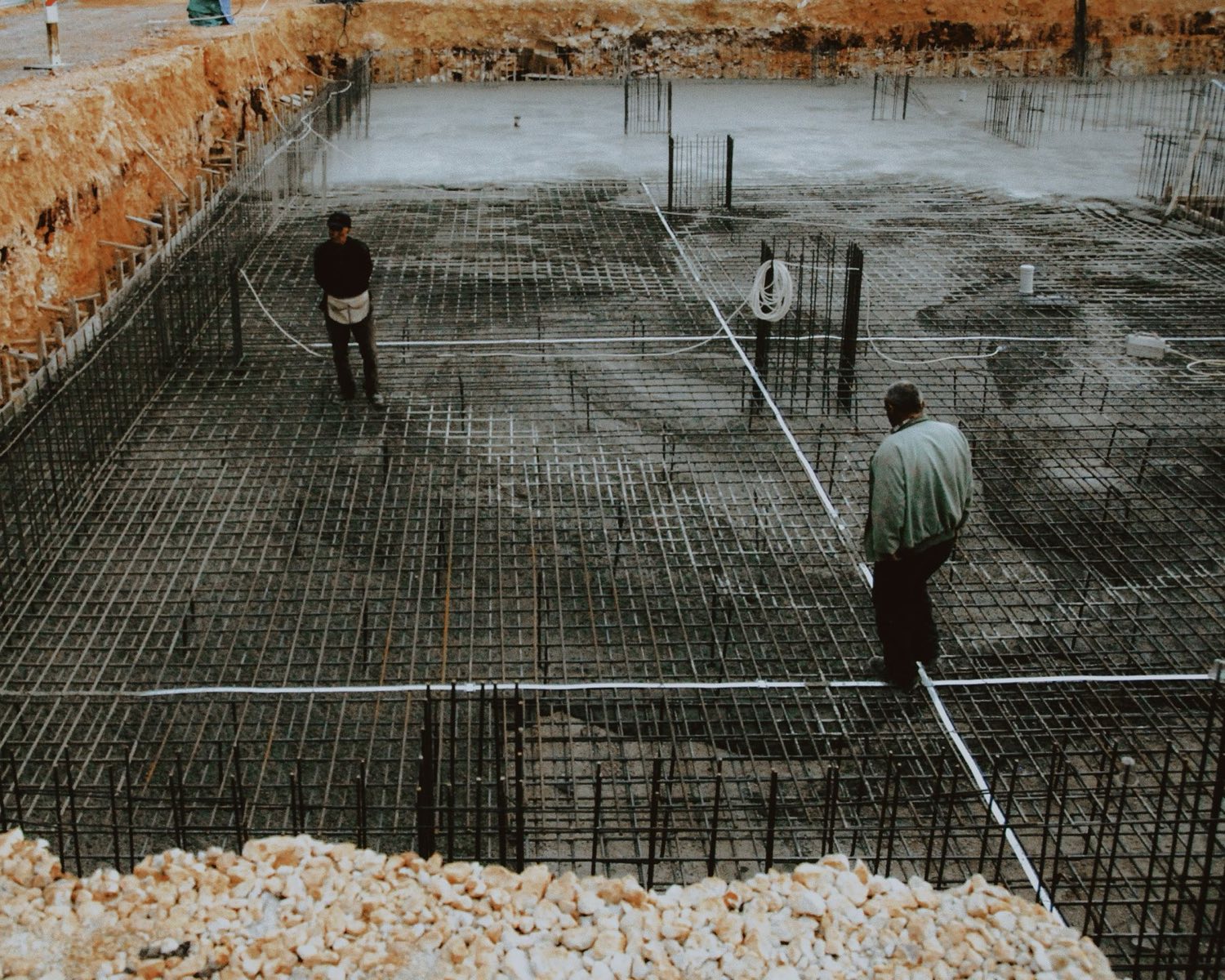
Ada County's freeze-thaw exposure changes three numbers from a mild-climate default: a 4,000-psi air-entrained mix instead of 3,000–3,500 psi, 5–6 inches of thickness instead of a 4-inch minimum, and base prep that separates the slab from the local duripan rather than resisting clay heave. The reasoning behind each number, plus joint spacing, reinforcement, and finish options, is laid out as a bid checklist on concrete in Boise: what to know before your first pour, so a first-time buyer can hold a quote against it line by line.
Finish options
- Broom finish: textured, slip-resistant; the default choice for a driveway.
- Exposed aggregate: surface mortar removed to reveal decorative stone; durable and slip-resistant, a mid-premium option.
- Stamped/decorative: patterned and colored; common on patios and walks, but frequently banned in the public right-of-way portion of a driveway apron, so check before choosing it for the whole driveway. See stamped & decorative concrete.
What it costs
Plain driveway installation typically runs $8–$18 per square foot, putting a standard two-car driveway around $6,000 as a rough midpoint. These are typical national ranges, not a quote for a specific lot. What moves the number: square footage, the 5–6 inch freeze-thaw thickness versus a 4-inch minimum, reinforcement choice (mesh vs. rebar), base prep depth over the local hardpan, finish, demolition if replacing an old driveway, and any right-of-way apron requirements. A driveway is a first-pour decision made once, carefully, rather than a repeat purchase. Full cost breakdown and what widens or narrows the range: what concrete costs in Boise.
Repair versus replace, if the driveway already exists
If you're looking at an existing driveway rather than pouring new, the same freeze-thaw mechanism that shapes the spec above is usually what's damaging it: scaling, joint spalling, or a settled panel from a hard winter. Hairline cracks under about 1/16 inch are typically cosmetic; anything wider, or a panel that's faulted at a joint, is worth a closer look. The full diagnostic and repair-vs-replace decision ladder is on concrete repair.
Timeline, briefly
New concrete reaches about 75 percent of its 28-day design strength within 7 days; 28 days is the standard strength-test age, not the day the slab becomes usable. Practical use windows (in normal 50–80°F weather; Boise's placement window skews toward the hot, dry side of that in summer): walkable in roughly 24–48 hours, light vehicle traffic around 7 days, with driveways commonly held to closer to 14 days before regular vehicle use, and full structural load by about 28 days.